作者:Michael E. O’Hanlon 来源:中美印象
美国虽然不满于中国的南海主张,但是必须认识到,中国在南海的一系列行为是其力量增长的自然表现,美国应该认识到中国在南海适度的力量扩张对美国的国家利益来说并不是一个威胁。所以,美国的目标应该是促进中国南海政策与行为的透明性、适度性。此外,需要明确的一点是中国人工建造的岛是不具有领土意义的,美国应该学着塑造、改变中国那些基激进的行为。
With President Xi Jinping’s pending visit to the United States, it is important to take stock of the subjects uniting China and America and those over which disagreement is inevitable. The latter subjects include cybertheft and China’s continued repression of various elements of free speech, personal freedoms, and minority rights within its own territory. The former include most elements of the trade relationship and cooperation on environmental sustainability, among other matters.
Where does the South China Sea fit in? For some American strategists, this is the place where right now China is showing the most worrisome tendencies towards great-power brutishness. It is reclaiming reefs and sand bars and turning them into islands with potential military capabilities, while occasionally winding up in skirmishes with neighbors like Vietnam and the Philippines (the latter a formal U.S. ally) over specific reefs, shoals, and the like.
It is true that we need to keep a close eye on Chinese behavior in this region. In particular, Beijing’s establishment of a “nine-dash line” that encompasses almost all the South China Sea (with its key trade routes), islands, and seabeds (with their own associated economic resources) is very worrisome. If China literally intends to enforce sovereign claims to all these zones and assets, we are in for a very difficult period ahead. The United States should stand firm in opposing any such claims, and also in insisting that China pursue its claims in the region peacefully and with full respect for the rights of all nations to use the crucial sea lanes in this busy body of water.
Separating the wheat from the chaff
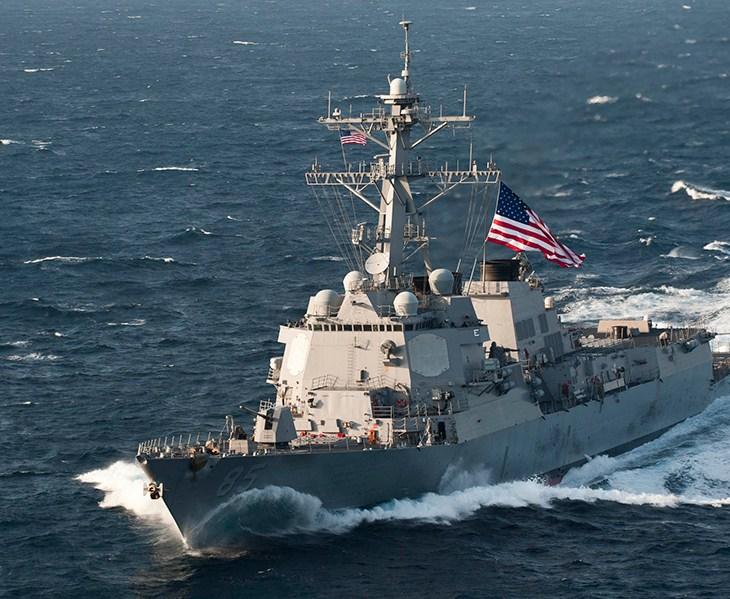
But in another sense, I believe there is a way to defuse some of the problems with China in this region. The United States should not view every development of an artificial island, or even a modest military airfield, as a threat to our interests or those of other states. To some extent, this is expected behavior for a new great power. It is also in a sense hard for us to object to. In a way, China is building “stationary aircraft carriers” that are analogous to our actual aircraft carriers. We sail our ships to the region from thousands of miles away; they base some military assets on artificial islands from a homeland hundreds of miles away.
It is not entirely clear how our actions can be legal and legitimate and theirs fundamentally illegitimate. To be sure, international convention has long condoned the rights of any nation to use international waterways for its naval and commercial vessels. Island reclamation is a new phenomenon. But that does not, to my mind, make it automatically threatening.
What we can demand of Beijing is transparency, and moderation, in how much it builds up militarily in this region, and a commitment to the non-use of force in how it pursues its interests in the region. China also must not be allowed to claim broad territorial waters and economic rights around these artificial islets; again, they can and should be treated like ships, not land formations. But we would be better advised not to push back equally hard against all aspects of Chinese behavior in the South China Sea. Some aspects of China’s rise in that region are nearly inevitable, and so we should focus our attention on trying to shape or change those aspects of China’s behavior that are truly objectionable and threatening.
链接: http://www.brookings.edu/blogs/order-from-chaos/posts/2015/09/18-south-china-sea-us-policy-ohanlon
来源时间:2016/6/29 发布时间:2016/6/29
旧文章ID:10729