作者:Robert A. Kapp 来源:US-China Perception Monitor
/Uploads/kindeditor/file/20180406/170104.SR.pdf
来源时间:2018/4/6 发布时间:2018/4/6
旧文章ID:15862

作者:Robert A. Kapp 来源:US-China Perception Monitor
/Uploads/kindeditor/file/20180406/170104.SR.pdf
来源时间:2018/4/6 发布时间:2018/4/6
旧文章ID:15862
作者:Robert A. Kapp 来源:US-China Perception Monitor
/Uploads/kindeditor/file/20180406/2016.pdf
来源时间:2018/4/6 发布时间:2017/4/1
旧文章ID:15861
作者:Robert A. Kapp 来源:US-China Perception Monitor
/Uploads/kindeditor/file/20180406/March 2013-December2014.pdf
来源时间:2018/4/6 发布时间:2018/4/6
旧文章ID:15860
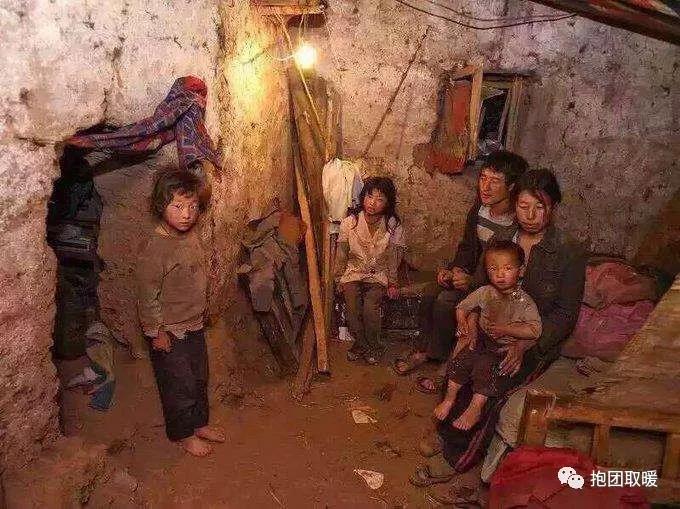
作者:主歌 来源:抱团取暖
新闻背景:昨日主歌看到一则新闻,概要是,在受到舆论的质疑和批评后,清h大学国情研究院院长胡某钢坚称"中国已全面超过美国,毕竟我们才是专家",他表示"学术研究要用学术的形式对话,我们的说法用了专业知识产权数据库做论证。"他还表示"中国整体实力居世界第一,这是做过研究的,并发表在《清华大学学报》,之后才对外公布。"
很多网友对胡鞍钢的研究报告不以为然,并且还痛斥他"胡言乱语"、"不要脸"、"用心不良"、"误国误民"。
(全文)看到这则信息,主歌几乎要瘫倒了,如果是一位农村的文盲大妈说出这个看法,那么主歌很理解,但是,从清h大学国情研究院院长胡某钢嘴里喷出这个研究成果,则令人不可思议。如果,我要对胡教授作出一个评价,那就是:莫名其妙!
为了让胡教授这个伟大的学术业绩无地自容,主歌从几个重大领域来比较一下中美各自的指标,一个国家的整体实力无外乎包括政治、经济、文化、教育、科技、体育、军事这几项吧:
1.国民生产总值。2017年美国的GDP总值是130万亿(人民币),中国是82万亿(人民币)。我们不去计较中国GDP数值的水分, 单就媒体公布的数字符号就可以核算出,中国比美国少48万亿元,差了三分之一。那么,脑袋正常的人都明白:国民生产总值是一个国家经济实力的主要象征。中国的主流媒体也一直都有这样清晰的概念, 那就是:中国是世界上第二大经济体。那么,请问胡院长,你发布的"中国整体实力居世界第一"这个论断,是否包括"国民生产总值"这个项目呢?中国国民总收入都比美国差一大截,换言之,中国经济领域成绩远逊于美国,你又是根据什么材料来断定中国整体实力居世界第一呢?
2.产业规模及其品牌。
(1)2017年世界500强排行榜由美国《财富》杂志发布,数据如下:美国企业上榜132家,中国企业上榜115家,从数量上,美国就领先中国,如果再从企业质量的角度去探究,我们可以了解到,中国国企央企占得比重较大,而美国都是私企打天下。那么我们就由此发现了一个经济上的规律:中国国企央企大而不优,营业收入大,但经济效益差,也就是企业利润很低。有一些企业还是在亏损经营,因为国企央企有银行输血,因此它们并不担心倒闭。而美国的企业都是实打实拼出来的,收入与利润必须同步发展,它们没有国家力量的任何扶助,负债率很低,都是优质资产。用"大而强"来形容这些美国的巨无霸企业,一点都不为过。
(2)福布斯发布了2017年全球富豪20强排行榜,美国人霸占了14个名额,财富总值6657亿美元;而中国只占有2个名额,一个是王健林,一个是李嘉诚,财富总值625亿美元。从这个富豪榜的信息可以解读出:美国超级富豪的财富总值是中国的10倍,美国人创造财富的能力大大胜过中国人。主歌直言道:相比而言,中国boss还嫩了一点。
(3)2018年全球市值最高的公司10强排行榜中,美国占有8个,老大苹果市值超过了8000亿美元,这8家的总市值超过40000亿美元;中国占有2个,就是腾讯和阿里巴巴,合计市值只有8000亿美元。从上述数据中发现,美国大型上市公司市值规模是中国的5倍,那么我们完全可以评估,美国上市公司的整体财富规模甩中国上市公司几条街。美国诸多优质的上市公司担负起了美国经济大动脉的重任,引领美国经济高速健康发展。而中国的许多上市公司则无法带头牵引中国经济健康高速发展(原因很复杂,一是受到诸多限制,二是没有公共责任感)。
世界500强企业,世界超级富豪,世界大型上市公司,这三个经济单位的实力指标,中国都无法比肩美国,那么,胡教授所称的"中国在经济实力上超越美国"的命题是如何证明出来的呢?
3.人均GDP。2017年美国人均收入是57765美元,位列世界排行榜第5名,中国是8868美元,位列排行榜第69名。中国人均收入与美国人均收入相差6.5倍,也就是说,6.5个中国人一年的收入只能抵一个美国人,中国人是不是该感到羞愧难当呢?一个整体实力居世界第一的中国,为何他的国民人均收入会那么低呢?你胡博士想得通,我主歌想破脑袋也想不通。
4.消费能力。2017年,美国社会消费品总额超过36万亿元(人民币),中国社会消费品零售总额也超过36万亿元(人民币)。在这个类目上,中国两国相差无几,但基于人口总数,我们则可以推算出这样的答案:美国人口是3.2亿,中国人口是13.9亿,中国的人口是美国的4.3倍,那么就可以说,美国人的消费能力是中国人的4.3倍。换言之,4.3个中国人的消费水平才能抵得上一个美国人。一个消费水平不高的国家(中国),它的整体实力是如何超越消费水平高的国家(美国)?
5.货币地位。现在美元在世界上的货币强势地位,没有谁会怀疑。大多数国家都把美元作为外汇储备货币,中国也不例外。也许很多吃瓜群众不认可美国,但你们不能不认可美元,如果你你们真有骨气,抛弃美元,只认人民币,那么中国的对外份my额将会萎缩到原来的20%以下。当今有三分之二的美元货币在美国以外的地区流通,可见美元在世界上的分量(达到了40%)。人民币(在全球份额仅为1.85%)与美元相比,那是小巫见大巫,中国人没脸去讨论。有许多著名的经济学家宣称:50年之内美元的霸主地位不会动摇。因此,主歌在想,一种货币(人民币)在世界上的使用量只有1.85%的国家(比日本2.92%还少),并且只能在蒙古、巴基斯坦、越南、缅甸、老挝、朝鲜等几个落后国家流通,它的国家整体实力竟然居世界第一位,这不很矛盾吗?
6.科技发明。
(1)原北大教授张维迎教授2017年7月1日在北大经管学院毕业典礼上说过,"中国在过去500年没有做出一项可以载入史册的发明创造,意味着我们对人类进步的贡献几乎为零"、"在过去500年,全世界838项重大发明中,没有一项来自中国"。那么,张教授的言论就让主歌萌生了一点想法:一个过去500年都没有一项重大发明的中国,它的综合实力成为世界第一的底气从何而来?
(2)难道中国依托"山寨能力全世界第一"也能成就世界第一强国吗?或者说,有人鼓捣出了一个共享单车模式就证明中国立马进入了世界实力顶峰的地位?或者说,中国花费巨资建设了几条高铁就显示中国整体实力跑到了世界第一的位置?或者说,中国制造出了几种镇国大杀器(航空母舰、核导弹、卫星、核潜艇、歼-20、轰-6)就显示中国整体实力跃居世界榜首吗?或者说,人定胜天,中国人多力量大、亩产十万斤,中国实力飞跃上升吗?但一个国家的整体实力,可不是像周某平、司某南、金某南、戴某、罗某、张某为、胡某钢这些"小丑"所胡诌的那么简单肤浅,而是要复杂深入得多!
(3)这里主歌要啰嗦一下军事武器装备的话题。很多爱国的中国人很为中国的武器装备精良和威慑性大而感到自豪,认为这是国家强大的标志。但主歌要强调的是:一个国家的武器装备无论如何先进,如何具有杀伤力,如何让外国恐惧,这都与国家的科技水平和综合实力没有鸟毛关系。因为无论那个国家花费巨资研发先进武器装备只会加剧国际上的军备竞赛,给世界安全与和平带来巨大隐患。而且,庞大的国防预算也会拖累国家的经济发展步伐,对民生福利有害无益。爱国者会认为,没有强大的军事力量,就会被美国欺凌,主歌说:这是杯弓蛇影的心理,世界上很多国家的军事力量都很弱小(加拿大、挪威、韩国等等),它们也没有被美国侵略,日本境内有美国驻军,也没有灭亡。有一个专家说得好:落后不会挨打,只有不讲道理或不遵守规则才会挨打。
(4)而美国人的科技发明在世界上贡献突出:互联网是美国人发明的,美国人发明的芯片成了计算机和手机的核心部件,计算机和手机完全离不开美国人发明的操作系统(Windows和Android),美国人发明的GPS在全世界导航,美国的波音飞机满世界飞,美国人发明的智能机器人现在正在成为热门项目。还有中国银行、飞机、高铁的控制系统都是美国的产品———-美国的高科技产品举不胜举,美国对人类和世界的贡献可以说是罄竹难书呀!胡叫兽说"中国已全面超过美国",真的不怕打脸,反正他脸皮厚!
(5)截止2017年,全世界诺贝尔奖的获得者共有876人,美国共有356名获得者,占据了诺贝尔奖获得者总人数的三分之一。而中国只有李政道、杨振宁、高琨、屠呦呦、莫言等寥寥几人获奖。诺贝尔奖代表了世界上最顶尖的科研理论和科技创新水平,中国与美国有得比吗?主歌的脑子有点乱了:科技制高点被美国占据,处于科技最底端的中国是怎么创造奇迹使中国整体实力超越美国跃居世界第一的呢?
7.教育。可以这么说,教育是一个国家的"造血器官",教育的水平和发达程度代表了这个国家整体实力的核心因素,换言之,教育强,国家强。从下面的论述,可以照射出中美两国在教育领域的差距。
(1)世界100所著名大学排行榜上,前11名依次是:哈佛大学(美国)、斯坦福大学(美国)、剑桥大学(英国)、麻省理工学院(美国)、加州大学-伯克利(美国)、普林斯顿大学(美国)、牛津大学(英国)、哥伦比亚大学(美国)、加州理工学院(美国)、芝加哥大学(美国)、耶鲁大学(美国)。中国的清华大学排名第49,北京大学排名第72。这个名次的含义,我相信大家都明了。美国这些顶尖大学所创造的学术成就和学术地位,中国全体大学都只能默默自卑。
(2)中国大学生占总人口的比例仅为8%,大大低于世界中、低收入国家24%的平均水平,更不用说美国的35%了。我们试想一下:中国大学生在中国还是一个少数群体,并且学历素质不是很高,扩招之后有部分大学文凭都有水分,很多大学生毕业即失业的现象也很严重。那么主歌疑惑的是:中国知识分子的基数不大,那中国凭借什么优势来促进国家整体实力超过大学生占总人口比例达到三分之一的美国的呢?
(3)2017年就读于美国高等教育机构的中国学生人数增至35万,而且中国赴美留学人数超过所有国家,位居榜首,占在美国际学生总数的32.5%。相对照的是,美国来华留学的人数只有区区2.4万人,两者想差将近16倍。那么这些数据反映了一个显著的问题:美国教育深得中国学生青睐和向往,而中国教育则很难获得外国留学生特别是英美学生的信任和认可。最令人不可思议的是,来华留学生可以得到中国政府的高额补贴,根据学历高低,政府补贴7万(本科)、8万(硕士)、10万(博士),这不是明摆着花钱拉人头凑数吗?!
8.文化。文化领域涉及的内容很广泛,主歌无法一一列举比较,我在这里只举电影的例子:美国好莱坞的大片风靡世界,不同民族的人都很欣赏,但中国的电影,只有中国人欣赏和认同,走出国门就成了冷门。2017年中国电影总票房突破500亿元(人民币),而北美票房达到了110亿美元(折合人民币700亿)。中国的电影票房与美国的差距不是很大,但如果考虑下面两个因素,那么中国与美国在电影业的差距就拉大了:中国人口是美国的4.3倍,看电影是一次性消费,票房完全依赖人口凑数;中国去年虽然总票房突破了500亿(人民币),但进口影片票房占据了238亿元(人民币),国产影片票房只有262亿元(人民币)。我们来算算人均票房,中国是19元,美国是218元,两者相差10倍多,差距不小吧。
9.体育。很多官员、专家和吃瓜群众总想以体育上取得的成绩来渲染中国是多么的强大,那么我们来看看31届奥运会中美总奖牌榜的情况。中国参加奥运会10次,获得奖牌总计541枚,其中金牌224枚;美国参加奥运27次,获得奖牌2521枚,其中金牌1022枚。通过计算,我们可以得出中美每次奥运会平均获奖数目:中国奖牌数54枚,美国奖牌数93枚,中国金牌22枚,美国金牌37枚。这样一对比,就能发现:无论是奖牌数,还是金牌数,美国的成绩比中国斐然。如果再从体育投入产出比来分析,美国就更是秒杀中国,因为中国是举国*体*制*培养运动员,花费纳税人的钱来培养选手,而美国的参赛选手都是自己出钱聘请私人教练。美国不但看重比赛,更重视全民体育运动,美国人的身体素质都比较出众。而中国人普遍缺乏体育运动,身体素质不行,大家心知肚明。
10.军事。这一个领域,其实,高下立见,但是为了让吃瓜群众信服口服,还是举证如下:
(1)海军。美国现在最先进的航空母舰是福特号航空母舰,是美军第三代核动力航空母舰,而中国的辽宁号是中国的训练舰,根本就没有形成战斗力,有行家这样评价中国的辽宁号与福特号:辽宁号比福特号落后20年,与福特号相比,辽宁号仅一枚玩具。有吃瓜群众会争辩说:中国正在制造新航母,它技术超群,可与美国先进航母一比高下。主歌这样回答你们:等新航母形成战斗力再来夸口不迟。
(2)战略武器。在洲际弹道导弹攻击能力上,美国拥有世界上精度最高的路基洲际导弹改进型民兵-3和精确度最高的潜射洲际导弹三叉戟-2。中国的东风-41洲际导弹在精度上还是略输一筹。并且由于美国拥有"萨德"等导弹防御系统,而中国则还没有开发出导弹防御系统,那么,美国可攻可守,而中国只能攻而不能守,中国弱势一目了然。
(3)空军。美国最先进的战机是F-22、F-35,是世界上最具致命杀伤力的第五代战斗机杰出代表机型,而B-2轰炸机是当今世界上唯一一种隐身战略轰炸机,具有"全球到达"和"全球摧毁"能力。而中国的歼15、歼16属于第三代战机,歼20属于第四代战机,还有轰-6轰炸机,根本就不具备隐身功能,这些战机都与美国的差距至少落后10年以上。
(4)陆军,地球人都知道,美军近30年经过了多次海外演习和海湾战争等多场实战的锤炼,实战能力是全球第一强。特别是海湾战争,美国把伊拉克打得稀里糊涂,见证了美国逆天的军事威力。中国自从1979年yue战后,就再没有实战的经历了。两相比较,强弱分明。
(5)综合实力。连局座张召忠在电视节目里都无意中说了一句大实话:美国现在就算是停下来,就不发展让中国追,二十年内,中国也不会超过美国。因此,我们可以断定:在军事上,中国与美国不在一个层次上。
11.政治方面。这个是意识形态,是最抽象的事物,公说公有理,婆说婆有理。主歌只评点一句:美国等西方国家属于MZ制度,经历了长时间的考验。此处比较敏感,就不多言,你们自己捉摸。
12.总结陈词。主歌通过全方位的论证和对比,用数据和事实证明了一个毋容置疑的结论:在表现国家整体实力的几个重大领域,美国都力压中国,中国只能望其项背。那么,问题就来了,那个鼎鼎有名的清h大学国情研究院的院长胡某钢为何会坚称中国已全面超过美国呢?这是胡教授的脑子坏了,还是主歌的脑子进了水呢?
(1) 难道清h大学国情研究院创建的目的就是为了弄虚作假和吹捧中国的吗?这样的国情研究院还有存在的必要吗?它不是观察、研究和总结中国的问题、不足和劣势,向上C呈报,以便上C能够知晓中国与发达国家存在的差距然后采取相对应的措施来弥补中国的短板,促使中国进步和发展。这个清h大学国情研究院,它不做正事,却莫名其妙的绞尽脑汁来证明:武大郎的整体实力已超越姚明,中国篮球的整体水平已超过了美国,羊的整体实力已超过了老虎,刘禅在位时的蜀国整体实力已超过了司马昭控制的魏国,朝鲜的整体实力已超过了日本,孙悟空的整体实力已超过了如来佛祖。
(2)在这个国家,总有一些跳梁小丑要公开挑战常识和*PS*价*值*观*,以达到名利双收的目的。例如,周某平同志,在微信公众平台撰文贬低米国、抹黑米国,进而宣扬民族主义。他这种为达目的而丧失底线的"文人",胡编乱造、妖言惑众、麻痹受众,对社会危害深重。周小平是一个网络职业写手,个体户,他胡某钢是一个大学教授,国家gong职人员,他们的身份不同,但是动机一样,企图用歌功颂德的方式向*上*C*谄媚,迎合*上*C*的心思,获得*上*C*的青睐和赏识,然后荣华富贵就会向他们抛出橄榄枝。
(3)一个国家,从来不是通过他的国民阿谀奉承而变得强盛,美国建国只有短短239年, 它就一直在民众和媒体的质疑、批评、抨击、反对、抗议的氛围中生存,但美国并没有崩溃,现在反而变成世界第一超级强国。这说明了什么原理呢?主歌认为:人在被别人赞美和奉承的气氛中容易陶醉,陶醉时就容易忘乎所以,忘乎所以的人也不会发现自己的缺点和不足,那么就更不要谈改正自己的缺点和不足,他就永远不会进步和升华。国家也同样如此。但世界上的人,那一个人或一个国家能够做到完美无缺呢?
(4)如果胡某钢的这个"胡话"能够成立,那么主歌真的感到这个国家已经进入了无知的世界。美国的强大和伟大,不是美国吹嘘出来的成就, 它已经得到了世界大多数人的认可和肯定。这个世界,总是那么诡异,德国、法国、英国、意大利、日本、澳大利亚、加拿大、韩国等等MZ发达国家都非常尊重和认同美国,与美国保持着亲密的关系;倒是那些ZZ落后贫穷的国家,例如:委内瑞拉、津巴布韦、古巴、伊朗、叙利亚、巴基斯坦、朝鲜、俄罗斯和某大国,极端的仇恨美国,处处与美国对立。主歌就纳闷了:阳关大道(亲近美国)就在眼前,有些人坚决不走,偏要摸石头走羊肠小道(与美国敌对),这是什么特色思想?
(5)过去30年,中国确实在经济上取得了举世瞩目的成就,因此很多中国人就变得狂妄自大了,人只要狂妄自大,就会不知天高地厚。要知道不自量力、坐井观天,只会害死人。我们应该明白,现在美国的航母能够世界自由航行,可以直达任何一个海域,而中国的辽宁号只能在南海与台湾海峡等近海区域游弋。你有何资本与美国叫板?还有,韩国部署一个"萨德"导弹防御系统,就把中国吓得不轻,你说你中国还有多大的底气宣称"超越美国"?中国的祖先都说过:满招损,谦受益,我们现代更加有智商的中国人反而不明事理。主歌认为:即使中国全面超越了美国,我们也应该冷静一点、理性一点、温和一点,这样可以保护自己。如果你天天叫嚣、咄咄逼人,会招致外国的恐惧和警惕,它们进而会对中国采取排斥和压制的措施,这对中国的发展是十分不利的。(如果您欣赏此文,请别忘了转发哟)

主歌时评:一个人,或一个国家,无论强弱,都必须遵守一个信条:我们永远不能说谎,也不能相信谎言,我们要说真话。也就是说,坚持说真话,是一个人的底线,也是一个国家必须捍卫的准则。也许我们的认知有限,但我们不会睁眼说瞎话。虽然我们不一定能够分清那个是真理,那个是谬论,但是我们要分清常识,分清常识并不难。一个不尊重常识和事实的国家,这个国家需要反思。
来源时间:2018/4/6 发布时间:2018/4/6
旧文章ID:15859
作者:Justin Elliott 来源:US-China Perception Monitor
By Justin Elliott
Australia’s growing concern with Chinese influence in Australian affairs is exemplary of the problem China faces with its international image, one that the Chinese government appears reluctant to address.
China, it can be said, ranks high in economics. It has the second-largest economy by GDP of any country. By purchasing power parity, it ranks first. Since China began to liberalize its economy in the 1980’s under Deng Xiaoping, it has delivered remarkably consistent economic growth. Though slowing in recent years, it still continues to grow at an impressive rate, with analyses for 2017 suggesting growth of 6.9% (although the accuracy of this figure and its value as an indicator are somewhat contested). On this index at least, China has made it, or is at least well on the way to making it as a moderately prosperous society.
Like many countries, Australia has benefited greatly from China’s sizeable economic expansion and growing middle class. China is Australia’s largest trading partner, accounting for almost a quarter of Australia’s trade, and helped Australia weather the global financial crisis . Recently, economic ties were deepened further with the conclusion of the China-Australia Free Trade Agreement. Clearly, China plays a prominent role in Australia’s economy, and yet in spite of this, the relationship could hardly be described as close, with numerous incidents causing Australians to question the value and consequences of a closer relationship with China. For although China and Australia have significant economic linkages, there is more to a strong relationship than cold hard cash.
In the past few years, Australia has been rocked by a slew of revelations that paint a decidedly unflattering portrait of China in the Australian imagination. In 2017, the Chinese-born Sydney University of Technology scholar Feng Chongyi was unofficially detained for questioning in China over concerns voiced by Chinese authorities that his meetings with human rights lawyers threatened national security. Though he was eventually released, no further detail was provided on why an international scholar posed a threat to Chinese national security, leading some, like the head of the Australian National University’s (ANU) National Security College Rory Medcalf, to interpret Feng’s delayed return to Australia as a blunt “signal of intimidation to Chinese Australians not to criticise Communist party interference in Australian domestic affairs” – a frequent concern voiced by Professor Feng.

After a week-long detention in China, Professor Feng was greeted at the airport in Sydney.
On the domestic front, former high-profile senator Sam Dastyari resigned after being embroiled in a number of scandals involving Chinese influence, including accepting funds from individuals and companies linked to the Chinese government and endorsing China’s stance on the South China Sea over his own party’s position. These revelations formed part of a wider media investigation of Chinese-linked donations to Australian political parties, which helped galvanise the government into introducing legislation intended to curb undue foreign interference.
Perfectly encapsulating this ongoing debate, two opposing open letters from two groups of Chinese scholars were published in response to the proposed government legislation. The first contends that, although instances of interference should rightfully elicit concern and scrutiny, there was currently “no evidence … that China is intent on exporting its political system to Australia, or that its actions aim at compromising [Australia’s] sovereignty”. Evidence, they suggest, was often lacking context and promoted conspiracy theories with racial undertones. Undoubtedly, this is a legitimate concern, especially given Australia’s chequered history of race relations. The second group, of which Feng Chongyi is a member, agrees with this concern, but also believes “that some of the CCP’s activities constitute unacceptable interference in Australian society and politics. We believe these have in a number of instances sought to restrict personal freedoms, impede democratic processes and affect national security, with the potential to harm Australia’s interests and sovereignty.” Clearly, there is growing if still contested concern on the influence of China in Australian society.
Unsurprisingly, the Chinese response to the unfolding events has been dismissive. The Chinese Embassy in Australia issued a statement in response to the media’s recent portrayal of China (which prompted the proposed legislation), asserting that the reports “were made up out of thin air” and contributed to racial hysteria against Chinese Australians. In addition, politicians and government officials had made “irresponsible” remarks, damaging US-China relations, and that Australia needed to view the bilateral relationship “in an objective, fair and rational manner”. As pointed out by ANU scholar Rory Medcalf, such language is unlikely to help dispel negative images of the Chinese government in Australia.
In any event, China will likely have to respond to more of these accusations in the future. Other countries like New Zealand, Germany, and the US are also beginning to question Chinese influence, and as China increases in stature around the world, it is only natural that others will pay more attention to its actions. China’s strong economy and rich cultural heritage are no doubt alluring soft power traits, but simply dismissing concerns as irrational does nothing to burnish China’s soft power and image abroad, no matter how attractive that image may be.
(Justin Elliott is a USCNPM contributor based in Melbourne, Australia.)
来源时间:2018/4/6 发布时间:2018/4/6
旧文章ID:15857
作者:Emily Calvert 来源:US-China Perception Monitor
Professor Yufan Hao recently gave a lecture to the staff and interns at The Carter Center entitled “Challenges to US-China Relations: A Chinese Perspective.” His presentation centered on the argument that as the US and China have come to understand one another more, they have paradoxically become more distrustful of one another.
In his presentation, Professor Hao offered a unique take on Sino-US relations, examining the relationship from a Chinese perspective. According to Hao, China and the United States have shared a complicated and often contentious history. Drawing upon this complex alternation between cooperation and conflict, as well as his own experiences with Sino-US “intense bilateral collaboration” and individual research, Professor Hao analyzed the current and future state of US–China relations, highlighting the sources and consequences of the growing suspicion between these two nations.
In his lecture, Professor Hao emphasized that there is increasing mistrust between the United States and China, a mistrust that has developed after (and in spite of) three decades of collaboration between the two nations. While cooperation has increased the mutual understanding between the United States and China, Professor Hao identified a crucial paradox: the more we understand each other, the more we distrust each other. Once this mistrust is present, every action of the opposing nation becomes open to various, and often negative, interpretations. Professor Hao noted that it ultimately does not matter whether the perception of an action is divergent from reality; perception is ultimately what drives politics and policy. Currently, much of the mistrust stems from perceptions about the United States’ policy towards China and the United States’ reactions to China’s policies. In China, many of the United States’ actions, especially its recent “pivot to Asia,” are interpreted as actions designed to contain China and contribute to an overriding sense of mistrust.
The relationship between the United States and China has been shaped by centuries of interaction, which in turn has molded their perceptions of each other and their unique foreign policy goals. The “Century of Humiliation” China endured at the hands of Western powers has shaped its strictly non-interventionist policy, which has frequently put China at odds with the United States and its mission to spread democracy. Most recently this issue has manifested itself in the cases of Iran, North Korea, and Syria. Additionally, from 1949 to 1972, the United States was viewed as virtually the only threat to Chinese national security, although in the late 1960s Russia was also considered an enemy. Deng Xiaoping changed these perceptions. His policy of keeping a low profile (taoguang yanghui, 韬光养晦) helped decrease American suspicions, while his reforms caused a surge of hope, both at home and abroad, about China’s democratic future—hope that turned to disappointment and mistrust after the Tiananmen Square Massacre on June 4, 1989. This mistrust has only increased as China’s economy has grown and Chinese leaders have become more assertive. After decades of cooperation, China again sees the United States as the only country that poses a security threat, while the United States is concerned about China’s growing power and influence.
China’s relationship with the United States has only grown more complicated in recent decades, especially concerning the conflicting attitudes towards democracy and America found among the Chinese population and its leaders. Professor Hao suggested several new strategies for dealing with this situation. He insisted that Chinese intellectuals are open to the suggestion of democracy, although they believe that the cost of American democracy is more than China can currently afford in terms of time, energy, and human capital. In the eyes of many Chinese, the Washington Consensus has failed, and should instead be replaced with a Chinese model—if not the Beijing Consensus, then at least a version of democracy with Chinese characteristics. In fact, Hao pointed out that some Chinese leaders now suggest that it is America, not China, who will be on the “wrong side of history”—that America’s interference in other nations’ sovereignty, especially in the Middle East, has hurt its moral standing. Therefore, within China we see support for democracy, but not necessarily support for America, compounded by a growing sense of nationalism that has been increasingly expressed on the Chinese web. In the opinion of many Chinese, America’s power peaked in the early 2000’s and has since been declining, while China’s star is only rising. China’s attitude towards the US is complicated by nationalistic and occasionally anti-American sentiment among the population, on one hand, and growing assertiveness and international political clout among the Chinese leadership, on the other.
These attitudes have led Chinese leaders to begin expanding their foreign policy and focusing on China’s relationship with other countries, especially African and Latin American nations, with the assumption that America will become less of a problem as its power declines. Professor Hao strongly objects to this attitude. He suggests that China should make the US-China bilateral relationship the center of its foreign policy, as the relationship will remain central to the future of both countries. He also suggests that China creates a mechanism for coping with US-China Relations that can accommodate a variety of possibilities, especially the possibility of a negative relationship developing between the two countries. Currently, according to Hao, no such mechanism exists; this creates a huge gap in China’s foreign policy and security. However, while Hao focused much of his discussion on the relationship between China and the United States, he emphasized that China must fix and reform its own domestic problems before it can overcome the challenges between the two nations. Only when China protects the human rights of its citizens and promotes democracy and rule of law within its borders can it begin to develop more productive and meaningful relationships with the rest of the world, especially the United States.
By Emily Calvert
Presented on June 12, 2012
Yufan Hao is full professor of political science and dean of the Faculty of School of Social Science and Humanities of the University of Macau in Macau, PRC. He received his PhD in International Relations from Johns Hopkins University in 1989. Professor Hao’s areas of expertise include Sino-U.S. relations, Chinese foreign policy making, Chinese politics, and Macao politics. In the spring of 2012, he joined the Brookings’ Center for Northeast Asian Policy Studies for its spring 2012 fellowship program.
Emily Calvert is studying International Studies and Chinese Language at Emory University in Atlanta, Georgia. She currently works as an intern for the China Program at The Carter Center.
来源时间:2018/4/6 发布时间:2012/6/13
旧文章ID:15856
作者:Robert Hinck 来源:US-China Perception Monitor
In this third installment, I cover the final negotiations between the US and China during President Carter’s normalization of relations, including the last second clarification on Taiwanese arms sales. For the first and second installments please see my earlier posts.Part III: Negotiating Normalization
Summary: Normalization succeeded in part because the US and Chinese negotiators’ focused on resolving the easy issues before proceeding to harder issues, preventing disagreement over the Taiwan question from derailing negotiations early on in the process. Continued US arms sales to Taiwan arose as the biggest challenge to US-China relations but, in the end, Deng’s desire to normalize relations with the US outweighed the need for an absolute ban on arm sales. Although the vagueness and last second clarification on US intentions to continue selling weapons to Taiwan might have helped with the immediate agreement to normalize relations, it also failed to co-orient both the US and China on a truly shared understanding of the Taiwan question, thereby passing the issue down to future diplomats.
Negotiating Normalization:
As agreed upon during Brzezinski’s visit, the US and China started holding secret bi-weekly negotiations on July 5, 1978, to work out all of the details on an agreement to normalize relations. The meetings took place in Beijing instead of Washington in order to avoid drawing unwanted attention in the US. Huang, who was well versed in dealing with foreigners, was to negotiate on behalf of China. Carter sent Leonard Woodcock, a labor union leader and professional mediator, to negotiate on behalf of the US. Carter chose Woodcock because of his negotiating skills and political connections in Washington, which he thought would help bolster Congressional support for an agreement on normalization.
Both sides were aware that the Taiwan question would be the hardest to negotiate despite US willingness to sever diplomatic relations with the ROC, remove its troops, and abrogate its mutual defense treaty with Taiwan. In order to avoid the risk of disagreements over Taiwan from derailing the negotiations altogether, Woodcock proposed that the US negotiation strategy focus on first settling the easy issues and then moving on to the harder issues, specifically Taiwan. He believed that early successes in the opening stages of the negotiation process would help foster a cooperative environment, setting the tone for when the two sides began negotiating the harder issues. All that was needed to start negotiations was Vance’s cable to Woodcock with the US proposals for normalization talks stating generally that if the US was able to maintain cultural and commercial contacts with Taiwan, and if China was willing to peacefully resolve the Taiwan question, the president was ready to normalize relations within the framework of the three principles (abrogating the mutual defense treaty with Taiwan, removal of US troops, and severing of diplomatic ties) expressed by China.
Negotiations carried on despite strong disagreement on arms sales to Taiwan. Woodcock’s strategy, as mentioned above, meshed well with the Chinese negotiation style; the Chinese negotiators preferred discussing broad issues before focusing on the specifics. Therefore, despite the issue of US arms sales to Taiwan, negotiations continued to progress. When the issue arose, the US would reiterate its intentions to continue selling weapons to Taiwan, prompting Deng and the Chinese to continue to voice their bitter opposition to any US weapons sales to the island, citing the Shanghai Communiqué and the US pronouncement of there being “one China.” Yet, despite the constant back and forth, Deng continued to express his willingness to normalize relations with the US, announcing during his visit to Japan that he would accept US terms for normalization as long as it fit the Japan model.
By November 1978 Woodcock was able to present the Chinese with a US draft communiqué on normalization. However, the Chinese government was slow to respond because they had become increasingly busy with preparations for the Central Party Work Conference. Carter and Brzezinski were afraid that the secrecy of the negotiations would not hold much longer and urged Deng to finalize the negotiations. As the US continued to wait for China’s response, Deng replaced Hua Guofeng as the forerunner to become China’s paramount leader. With Deng’s domestic base secure, China was ready to take the last step, and Han Nianlong, China’s new Foreign Minister, presented Woodcock with the Chinese draft of the announcement on normalization with only slight revisions from the US version.
On December 11, 1978 Brzezinski met with China’s US Liaison Office Director, Chai Zemin, to present the revised draft of the communiqué and extend an invitation to one of China’s leaders to come to the US. Deng then met Woodcock in Beijing on December 13 and presented Deng with the US communiqué. Deng agreed to the communiqué in general, expressing his desire that the US refrain from mentioning the one-year period before termination of military relations with Taiwan—as stipulated by the US-Taiwan defense treaty—and add an anti-hegemony clause. Deng also accepted the invitation to go to Washington. On December 14, Woodcock met with Deng and went over the final changes in wording, believing that they had finally reached an agreement. As Woodcock was meeting with Deng in Beijing, Brzezinski was meeting with Chai in the US. In Brzezinski’s meeting with Chai, though, Chai expressed the belief that the US had agreed to cancel all military sales to Taiwan. Brzezinski stated that the US had agreed not to sell weapons to Taiwan during the one year period before the mutual defense pact was terminated with Taiwan, but intended to resume afterwards. Brzezinski, fearing that this would derail the agreement at the last second, cabled Woodcock to ensure that China understood US intentions to continue selling weapons to Taiwan after 1979.
Woodcock met with Deng on December 15 at 4 p.m. Beijing time to warn Deng that, following the announcement of the normalization of relations with China, Congress would ask Carter about the sale of arms to Taiwan and Carter would have to assure them that the US would continue selling arms after 1979. Deng became extremely angry that the question of arms sales to Taiwan was coming up again and saw the US as severing relations with Taiwan in name only. Woodcock tried to explain to Deng what the US intended to do with Taiwan in specific terms. Deng, realizing that this was the last issue left to negotiate before relations were normalized, finally acquiesced to the US’s continued sale of defensive arms to Taiwan, albeit at a continually reduced level. Later that day, on December 15, President Carter announced that negotiations over the normalization of relations with China had been agreed upon.
Concluding thoughts:
Looking at the normalization of relations under the Carter administration, three conclusions can be drawn. First, domestic situations played a significant role in both countries. Both Carter and Deng had to work within the political boundaries placed on them by domestic realities. This was the starting point for both leaders, leaving them to look for strategies and ways to frame the benefits of normalization for home audiences, while spinning the costs to other members of government and their respective citizenry. Second, despite Deng’s desire to normalize relations, previous US administrations discussions with Chinese leadership prevented the Carter administration from obtaining a more advantageous settlement. When the Carter administration pressed for stronger ties with Taiwan, the Chinese would cite previous administrations’ promises, leaving the Carter administration to either accept the Japan-model or go back on previous US assurances. Even with the Carter administration’s initial focus on other issues instead of normalization with China, and its attempt to negotiate stronger governmental ties with Taiwan during Vance’s trip, the Chinese never backed down from previous US administrations’ statements regarding Taiwan. Third, the focus on areas of agreement over areas of disagreement helped move the negotiations forward. Throughout the negotiations, the issue of Taiwan would crop up in which case each side would respond by simply reiterating their position; negotiations proceeded nonetheless because each country focused first on the negotiable issues. When it was clear that there was agreement on every other issue and arms sales to Taiwan was the only issue preventing normalization, China was ultimately willing to accept vague language on US arms sales. This demonstrates that China remains flexible on principle issues when the benefits of doing so outweigh the cost.
By Robert Hinck
Robert Hinck is a graduate student at Central Michigan University studying Communication. He graduated from the University of Michigan’s Ford School of Public Policy with a major in US-Chinese relations and a minor in Asian Languages and Culture. His research interests include the social construction of US-Chinese relations, conflict management in the South China Sea, and US Political debates.
References
Brzezinski, Z. (1985). Power and principle: Memoirs of the national security adviser, 1977-1981. New York: Farrar, Straus, Giroux.
Carter, J. (1983). Keeping faith: Memoirs of a president. New York: Bantam Books.
Carter, J. (2010). White House diaries. New York: Macmillan.
Fardella, E. (2009) The Sino-American normalization: A reassessment. Diplomatic History, 33(4), 545-578.
Garrison, J. A. (2005). Making China policy: From Nixon to G.W. Bush. Boulder, CO: Lynne Rienner Publishers.
Glad, B. (2009). An outsider in the White House: Jimmy Carter, his advisors, and the making of American foreign policy. Ithaca, NY: Cornell University Press.
Hilton, B. (2009). “Maximum flexibility for peaceful change”: Jimmy Carter, Taiwan, and the recognition of the People’s Republic of China. Diplomatic History, 33(4), 595-613.
Kirby, W. C., Ross, R. S., & Li, G. (2007). Normalization of U.S.-China relations: An international history. Cambridge, MA: Harvard University Press.
Lobell, S. E. (2011). Winning friends and influencing enemies among great power rivals: The case of Washington, Beijing, and Moscow, 1969–1979. Chinese Journal of International Politics, 4(2), 205-230.
Ross, R. S. (1995). Negotiating cooperation: The United States and China, 1969-1989. Palo Alto, CA: Stanford University Press.
Solomon, R. H. (1999). Chinese negotiating behavior: Pursuing interests through ‘Old Friends’. Washington, DC: US Institute of Peace Press.
Tyler, P. (1999). A great wall: Six presidents and China. New York: Public Affairs.
Tyler, P. (1999). The (Ab)normalization of U.S.-Chinese relations. Foreign Affairs, 78(5), 93-122.
Vance, C. (1983). Hard choices: critical years in America’s foreign policy. New York: Simon and Schuster.
Vogel, E. (2011). Deng Xiaoping and the transformation of China. Cambridge, MA: Harvard University Press.
Walker, B. (2009). “Friends, but not allies”—Cyrus Vance and the normalization of relations with China. Diplomatic History, 33(4), 579-594.
来源时间:2018/4/6 发布时间:2012/6/12
旧文章ID:15855
作者:Robert Hinck 来源:US-China Perception Monitor
In this second installment, I cover the initial exchanges on normalization between US and Chinese officials, including Secretary of State Cyrus Vance’s failed meeting in August 1977 and Brzezinski’s watershed meeting in May 1978. For the first installment covering the initial conditions leading to normalization please see my previous post.Part II: Moving Towards Normalization
Summary: Not yet ready to normalize relations, Secretary of State Cyrus Vance’s trip to Beijing was more exploratory than National Security Advisor Zbigniew Brzezinski’s trip. It was during Vance’s trip that the Carter administration attempted to establish a bargaining position in favor of stronger ties with Taiwan; this attempt failed, not because of Vance, but because of Chinese leaders’ penchant for quoting previous administrations’ statements on the issue. On the Chinese side, Deng exploited Vance and Brzezinski’s bureaucratic rivalry over control of the Carter administration’s China policy by criticizing Vance and expressing his desire to negotiate with Brzezinski—known to be more in favor of normalizing relations with China than Vance—instead. The US public was still distrustful of “Red China,” prompting the negotiations to be conducted in secret, like during the Nixon administration.
Moving Towards Normalization:
Initial discussions did not bode well for normalization. When President Carter first met with Huang Zhen, China’s head of the liaison office in Washington in February 1977, the two could not agree on how to view the Taiwan question or the Soviet Union. Carter emphasized the US’s desire for a peaceful reunification of Taiwan with mainland China; Huang Zhen flatly stated that the question of Taiwan was an internal matter. Carter stressed his responsibility to negotiate with Moscow on issues regarding world peace; Huang Zhen described negotiations with the Soviet Union as a chimera, emphasizing the duplicity of Soviet expansionism. With these disagreements it was clear that, at that time, the US and China were not on the same page. Carter then turned his attention to other issues, such as SALT II and the Panama Canal Treaty, while still signaling that he preferred friendly relations with China. In the end the Carter administration was in no rush to normalize relations and wanted to move slowly on the question of Taiwan.
Finally, in August 1977, Carter sent Vance to Beijing to begin discussing the prospects of normalizing relations. However, at this time the administration still had not fully devoted itself to normalization. Just before Vance left, Carter told him to downplay the visit as the US was not ready to seriously begin negotiating normalization. For President Carter, normalizing relations with China would have to wait until he was able to pass the Panama Canal Treaty, which was facing tough resistance in Congress. Carter was afraid that talks of normalizing relations with China would rouse the powerful Taiwan lobby in Congress, further complicating the Treaty’s passage. Therefore, domestic politics required that Vance’s meeting be more of a ‘testing of the waters’ than a serious step towards normalization. During his visit, Vance met with Huang Hua, China’s Foreign Minister, Hua Guofeng, China’s paramount leader at the time, and Deng Xiaoping, one of China’s Premiers who was still solidifying his political base within the Chinese Communist Party (CCP) in wake of Mao’s passing. Vance began by discussing the biggest problem to normalization, the issue of Taiwan. One of China’s conditions for normalizing relations was the removal of US government officials from Taiwan. Vance suggested to Deng that the US was interested in maintaining stronger governmental ties to Taiwan than Japan—the previous year Japan had normalized relations with China and removed its Taiwanese consulate, but maintained an unofficial post to promote cultural and economic exchanges. Furious at the suggestion, Deng berated Vance, citing previous administrations’ pledges to follow the Japan model. In the end, Deng saw Vance’s trip as a step backwards in the normalizing process, and called Vance a bad negotiation partner.
After Vance’s trip, it was Brzezinski’s turn. Brzezinski and his deputy for Chinese issues began exploring the possibility of a visit to Beijing in early 1978. Upon hearing Brzezinski’s request, Deng immediately responded, stating that he would receive Brzezinski as soon as he could come to Beijing. Deng was eager to negotiate with Brzezinski in part because of the National Security Advisor’s strong anti-Soviet stance was shared by Deng; opting to meet with Brzezinski would also allow Deng to avoid Vance as a negotiation partner. This time, the US was ready for serious negotiations. Carter had just gotten the Panama Canal Treaty through Congress and felt confident that he could gain congressional support for both the SALT II Treaty and an agreement on normalization with China. Carter felt that the ideal time for the process to take place was just after the November 1978 Congressional elections. Vance’s State Department drew up plans for the US-China discussions on normalizing relations. Vance believed that any leaks regarding the administration’s move to normalize relations with China would open the negotiations to domestic politicking, killing any chance of successful negotiation. Therefore, Carter decided to conduct negotiations in secrecy, relying on Brzezinski and a selected few to conduct the negotiations, similar to how the Nixon administration relied on Kissinger for its secret rapprochement with China.
On May 21, 1978, Brzezinski went to Beijing and met with Foreign Minister Huang Hua and Deng Xiaoping. Huang and Brzezinski began their meeting by sharing their respective views on the international security environment, global development, and the balance of power between the Soviet Union and the United States. During their discussion Brzezinski shared the US view of the world held by the Carter administration. He said that the US did not believe that war was inevitable, the US did not seek to establish hegemony, accepted a world of diversity, and was not appeasing the Soviet Union, but rather competing with the Soviets on a worldwide scale. He also stated that Carter had authorized him to say that the US would accept the three Chinese conditions concerning Taiwan, which mirrored the same conditions that Japan had agreed to when it relations with China the year before: abrogation of the Mutual Defense Treaty, removal of all American military personnel from Taiwan, and severance of diplomatic relations with Taiwan. However, in accepting these conditions, Brzezinski held that the US reserved the right to declare that reunification of Taiwan and China would be achieved peacefully. United States’ acquiescence to the Japan formula marked a significant step forward in negotiations from Vance’s earlier trip.
Following his meeting with Huang, Brzezinski met with Deng. As in the previous meeting, Brzezinski and Deng discussed global security trends, with Deng criticizing the US’s Soviet policy as being too conciliatory. Satisfied with Brzezinski’s acceptance of the Japan formula for normalization, the two proceeded to lay the groundwork for normalization. Deng was particularly interested in exactly how prepared the US was to break relations with Taiwan, asking Brzezinski whether Carter had made up his mind on the issue. Brzezinski said that Carter had made up his mind and restated the US’s acceptance of China’s three conditions on Taiwan. Brzezinski proposed that the two sides begin confidential talks on normalization in June to work out all the details. Deng agreed and proceeded to talk about the threat of the Soviet Union, admonishing the US détente policy. He warned the US of the danger posed by the Soviet Union’s Asian encroachment and increasing influence in Vietnam, and inquired into US restrictions on exporting technology to China. Finally, Deng hinted at his desire to quickly finish normalizing relations.
来源时间:2018/4/6 发布时间:2013/4/13
旧文章ID:15854
作者:Robert Hinck 来源:US-China Perception Monitor
Most scholarship on US-Chinese relations has either focused on Nixon and Kissinger’s rapprochement with China or viewed President Carter’s normalization of relations with China as only one part in the larger story of US-China relations. This forthcoming series of commentaries is designed to reverse this tradition.Understanding exactly how the US and China were able to complete the final step in normalizing relations, despite disagreement over Taiwan, can help us understand the negotiated basis of the relationship and how the relationship has evolved since. In this first installment, I will lay out the general conditions in which normalization unfolded during the Carter presidency. The installments will proceed in three major sections: Setting the Stage & Domestic Realities, Moving Towards Negotiation, and Negotiating Normalization.
Part I: Setting the Stage & Domestic Realities
Setting the Stage: After Kissinger and Nixon’s rapprochement with China, both countries assumed that full normalization of relations would quickly follow—Nixon had even planned to do so in his second term. However, political turmoil in both countries prevented this from occurring. The Watergate scandal in the US, followed by President Ford’s pardon of Nixon, sapped the political capital needed to go forward with normalization in the US. In China, Mao’s declining health and the societal chaos unleashed by China’s Cultural Revolution favored anti-US hardliners, creating a political atmosphere deleterious to negotiations. It was not until Mao’s death and Deng’s political ascension that China was truly ready to normalize relations. The US was similarly not ready to normalize relations until President Carter came into office and, upon becoming disillusioned by Soviet expansionism, placed his National Security Advisor Zbigniew Brzezinski (known as an anti-Soviet hawk) over Secretary of State Cyrus Vance (known to favor détente with the Soviets) in charge of America’s China policy. Whereas under the Nixon and Ford administrations US-China relations were anchored by shared distrust of the Soviet Union, during the Carter administration the relationship was expanded to include issues such as economic development, Deng being the driving force behind this change.
Domestic Realities: Domestic considerations and bureaucratic infighting played significant roles in both the US and China leading up to the normalization process during the Carter administration. In order to push forward his modernization agenda Deng had to out maneuver the left wing of the Chinese Communist Party (CCP) during the aftermath of the Cultural Revolution. Meanwhile, during the Carter administration the US was preoccupied with issues other than normalization with China; Soviet policy at the time was détente, the cooling of tensions between the US and Soviet Union. But normalizing relations with China was seen as a potentially destabilizing move, significantly shifting the balance of power against the Soviet Union, and thereby adding tension to the US-Soviet relationship. Therefore, those in support of normalizing relations with China needed to reframe US foreign policy by painting the Soviet Union as untrustworthy and expansionist requiring strong US action to counter Soviet encroachment.
For China, the Cultural Revolution, finally brought to a conclusion by Mao’s death, had left China’s economy, society, and political structure in ruins. Deng saw how weakened China had become. Domestically, the Cultural Revolution and Mao’s death left the Chinese disillusioned by the Chinese Communist Party (CCP), placing CCP legitimacy in a precarious position. Internationally, with the US withdrawal from Vietnam, the Soviet Union began creeping into Asia threatening to surround China. Deng saw that the people’s faith in China’s Communist Party needed to be restored and to do so, China needed to modernize. While modernization would improve general Chinese well-being, it would also increase China’s economic and military might. Deng knew that Japan, South Korea, and Taiwan relied heavily on American science, technology, and education in their development and thus wanted to increase China’s ties with the US in these areas. For Deng, normalizing relations with the US would not only advance his political agenda, which was threatened by Hua Guofeng and left-leaning officials struggling for control in wake of Mao’s death, but it would also give him a personal political victory to cement his political base in the upcoming Party Congress. Therefore, China’s domestic politics helped to drive Deng’s desire to quickly normalize relations with the US.
Conversely, the American political environment was not so accommodating. Normalization of relations with China was not a high priority for the Carter administration, at least for the first year. There were several potential hurdles to normalization: the Taiwan lobby in the United States, the second Strategic Arms Limitation Treaty (SALT II) with the Soviet Union, and Vietnam’s interest in normalizing relations with the United States. The Taiwan lobby was made up of strong anti-communists and those who felt that the US was turning on its ally, Taiwan (Republic of China), during a time when faith in the US as an ally was at a low because of US withdrawal from Vietnam. The US Soviet policy at the time was détente, or the cooling of tensions between the US and Soviet Union. Therefore, priority was placed on the SALT II Treaty and cooperation with the Soviet Union was encouraged. In this context, normalizing relations with Vietnam was seen as a sign of cooperation with the Soviets because the Soviet Union was increasing its ties with Vietnam after the US withdrawal. Additionally, strengthening ties with China, who behind closed doors was strongly anti-Soviet, was seen as a potential anti-Soviet provocation. It was not until Carter became disillusioned with Soviet expansionist behavior in Africa leading up to the SALT II Treaty, and Brzezinski’s bureaucratic outmaneuvering of Vance on foreign policy issues, that Carter was willing to take a more pro-China approach over cooperation with the Soviet Union.
Photo: Deng Xiaoping and Jimmy Carter Press Conference by White House Photographer, 1979 / National Archive
来源时间:2018/4/6 发布时间:2012/7/13
旧文章ID:15853
作者:Andrew Dirks 来源:US-China Perception Monitor
The relationship between the United States and the People’s Republic of China has the capacity to define the global geopolitical landscape for decades to come. Following the official end of the United States combat mission in Iraq in December 2011, the gradual drawing down of American troops in Afghanistan, and against the backdrop of a global financial crisis that has lasted for nearly four years, American relations vis-à-vis China are likely to take center stage on the international scene. As the U.S. Presidential contest between Barack Obama and Mitt Romney enters its final month, the dangers of this important relationship being harmed by contentious political rhetoric from Republicans and Democrats has become too great to ignore. President Obama will be forced to walk a precarious tightrope on Sino-U.S. relations over the next month, as his opponent Mitt Romney and the Republican leadership attempt to present themselves as “tougher” on China.
Ex-Massachusetts governor Romney has criticized President Obama’s trade record on China numerous times throughout his campaign. Trade conflicts between China and the United States has led to one of the few specific campaign promises made by Governor Romney, who has vowed to officially accuse China of currency manipulation on his first day as president. This pugnacious attitude towards China is echoed in the official platform the Republican Party adopted in August 2012,which accused President Obama of “virtual surrender” on Sino-U.S. trade issues.[i] The Republican platform also decries China’s “destabilizing” territorial claims in the South China Sea and has promised to continue U.S. arms sales to Taiwan, which is always a contentious issue.[ii] The Republican promises of acting “tougher” on China put President Obama in a delicate position: how to counter these political attacks during the election without going so far as to harm the future of US-China relations should he win a second term. Sino-US relations are obviously important to the Obama Administration, as a senior diplomat of Obama’s foreign policy team told journalist David Sanger “If we get China wrong, in thirty years that’s the only thing anyone will remember.”[iii]
Has the Obama administration been weak on China as the Republicans claim? A review of the historical record of the last three years does not completely validate Republican attacks. During the first debate of the Democratic Primary season leading up to the 2008 Presidential election, Senator Barack Obama referred to China as “…neither our enemy nor our friend…They’re competitors.”[iv] As president, Obama has largely followed this line of reasoning. Obama’s creation of the US-China Strategic and Economic Dialogue in 2009 was an attempt to outline a new approach for strengthening Sino- ties on issues of security and trade.[v] Not dissimilar from Obama’s efforts to increase dialogue with Iran upon his election, this early effort at a new start for -China cooperation has been contrasted by Obama’s evolution into taking a stronger stance on China. Obama has doubled the amount of trade cases brought against China compared with the administration of George W. Bush.[vi] These trade cases range from complaints about excessive tariffs on American automobiles imported into China to restrictive Chinese export policies on rare earth materials to subsidies given to Chinese companies investing in alternative energy sources.[vii]
Additionally, Obama expanded on his active enforcement policy on Chinese trade by proposing the creation of a Trade Enforcement Unit during the 2012 State of the Union address designed to look into “unfair trading practices in countries like China.”[viii] Nevertheless, these policies have not immunized Obama from continuing criticism on the issue of China, with Governor Romney releasing a new ad on September 13 specifically attacking Obama on trade policies with China, in which Romney continues to claim that Obama has failed “seven times” to label China a currency manipulator.[ix] This attack is at best misleading, as it was not Obama personally, but the Treasury Department that has issued reports as recently as May 2012 that cleared China of currency manipulation.[x] This line of attack by Mitt Romney makes for a good political sound bite, but runs the risk of needlessly provoking China, as under World Trade Organization rules the United States could not act unilaterally against China even if it proved China was manipulating the yuan.[xi] Should this fight over labeling China a currency manipulator continue, it would not be the first instance of American domestic politics affecting Sino-U.S. relations, as the delicate issue of selling new jet fighters to Taiwan in 2011 was used by the Republicans to score political points.
American arms sales to Taiwan are always a sensitive issue due to Beijing’s insistence on Taiwan’s status as an integral part of China. This issue emerged again in 2011 with a deal for new F-16 fighter sales to Taiwan. Obama initially reached a compromise on this issue in September 2011 by withdrawing a proposed sale of more advanced class C/D fighters to Taiwan. Obama opted instead to upgrade Taiwan’s existing class A/B fighters aftervociferous objections to the sale of the new fighters by the People’s Republic.[xii] The issue appeared to be settled until the House of Representatives voted in April 2012 to force Obama to reconsider selling the more advanced fighters to Taiwan.
In addition to this vote by the House, Republican Senator John Cornyn of Texas had blocked the confirmation of Mark Lippert as the new Assistant Secretary of Defense for Asian and Pacific Security Affairs by placing a hold on his nomination only to be removed on the condition that Obama pledged to re-open the prospect of selling the advanced fighters to Taiwan.[xiii] This maneuver gained political capital for Republican Party as approving the sale could also allow Lockheed Martin, the company which manufactures the F-16, to retain thousands of jobs in the electoral battleground states of Ohio and Florida, where Obama is particularly vulnerable on the performance of the economy.[xiv]
Linking the foreign policy issue of Sino-U.S. relations to the domestic issue of the economy is a key reason why this particular foreign policy issue has played a large role in an election most prognosticators believed would be solely determined by which candidate could make the best case for improving the economy. This link also allows the Republican Party to attack Obama’s strength on foreign policy, as 52% of respondents to a major poll in May 2012 favored Obama over Romney in the foreign policy arena.[xv] Obama can point to several proactive policies towards China during his first term, and in defending himself against Republican attacks over China and the domestic economy, Obama needs to avoid responses that could hamper his ability to work with China during a potential second term. Likewise, Governor Romney, his running mate Paul Ryan, and the Republican Party in general must refrain from hyperbolic accusations of suspected Chinese treachery that plays on populist anger about the economy.
Populist anger about the prolonged weakness of the US economy could be one reason for the xenophobic tenor associated with China during the 2012 election. Attempts to harness this anger have been used by both sides, as a key riposte?? used by Obama to counter Romney’s criticism of his China policies has been to label Romney a potential “outsourcer in chief,” referring to Romney’s past in the private sector. While this statement is not necessarily inflammatory towards China, it is still preying upon an implication that China is somehow responsible for the continuing economic hardships of many Americans. The danger of statements that play on this trope is that they can lead to ugly episodes of racism. This occurred in the Republican Presidential primaries when former U.S. Ambassador to China and candidate Jon Huntsman found his familiarity with China and fluency of Mandarin Chinese used in a crude attack ad by supporters of rival candidate Ron Paul that used racist depictions of Chinese people and Chinese history. Ads like these have no place in American politics, and racial demagoguery of China only has the potential to harm Sino-U.S. relations. While Romney and Paul Ryan have not resorted to race-baiting when attacking Obama on China, there is a certain duplicitous nature to their use of this foreign policy attack when comparing their statements and proposals to their past actions regarding relations with China.
Governor Romney’s campaign speeches about attacking China for manipulating the yuan and practicing in other unfair trade practices is somewhat negated by his past investments in Chinese companies as a private citizen, namely the China National Offshore Oil Corporation (CNOOC). CNOOC came under fire from the US Congress in 2005 during an attempted purchase of the California based Oil Company Unocal, which US critics argued would have given control of a vital national resource to a foreign company. CNOOC further antagonized the U.S. in 2009 when it announced a deal with Iran to develop the North Pars gasfield.[xvi] According to his recently released tax returns, Romney’s personal blind trust invested in CNOOC seven months after the deal with Iran was finalized, selling the shares for $11,000 dollars in profit in August 2011, just as his nascent campaign began to criticize Obama for being “soft” on China.[xvii]
Paul Ryan’s critiques of Obama’s China policy also do not conform to his voting record in Congress. A favorite line of Ryan on the campaign trail is: “He [Obama] said he’d go to the mat with China. Instead, they are treating him like a doormat.”[xviii] Ryan uses this line to augment Romney’s claim that Obama has been insufficient in curbing unfair trading practices of China, particularly neglecting to label China a currency manipulator. As with Romney and his investments in C, Ryan’s voting record in the House of Representatives tells a different story. Paul Ryan voted against the 2010 Currency Reform Fair Trade Act, which specifically mentioned Chinese manipulation of the yuan. Ryan was also among House Republicans that derailed the Currency Exchange Rate Oversight Reform Act in 2011, which contained harsher prescriptions for Sino-US trade relations.[xix] That Paul Ryan had the opportunity to take concrete actions to be “tougher” on China and refused to do so weakens his attacks against the Obama administration, and combined with Romney’s conflicting actions and talk about Chinese trade practices, calls into question whether their use of China in the campaign is a sincere foreign policy dispute, or a cynical attempt to make the President look weak.
The Romney/Ryan argument that Obama has been “soft” on China does not hold up when examining the historical record of Obama’s first term in office. In many ways, Obama has tried to walk the line of attempting to hold China accountable to World Trade Organization (WTO) regulations while not needlessly antagonizing the People’s Republic and jeopardizing the Sino-US bilateral relationship. Thus far, Obama has resisted responding to Republican criticism during the election with harsher measures towards China, opting instead to highlight his past actions on this issue. This is a prudent method to respond to criticism while not damaging the future of Sino-US relations should he win a second term. The danger for the Romney/Ryan campaign is their continued use of calling for harsher measures against China. Should Romney become the 45th President on January 20, 2013, he would be pressured to make good on his campaign promise to label China a currency manipulator, even his past investment record shows he tends to hold a different personal view of China than he espouses in his political speeches. It is fair to hold China accountable if it indeed violates WTO regulations. It is dangerous to distort and needlessly ratchet up tension between China and the United States in an attempt to win an election.
Written by Andrew S. Dirks. Andrew is an undergraduate history student at Georgia State University and an intern for the China Program at The Carter Center.
Photo: Republican presidential nominee Mitt Romney and President Barack Obama during the first presidential debate in Denver, 2012. / AP
[i] “Republican Platform Outlines Tough China Stance,” Voice of America News, August 29, 2012, http://www.voanews.com/content/republican-platform-outlines-tough-china-stance/1497659.html
[ii] Ibid
[iii] Ryan Lizza, “The Second Term: What Would Obama do if Reelected?” The New Yorker, June 18, 2012, p.55
[iv] Graham Webster, “Obama on China: Neither our Enemy nor our Friend,” Transpacifica.net, April 27, 2007, http://transpacifica.net/2007/04/27/obama-on-china-neither-our-enemy-nor-our-friend/
[v] Dan Steinbock, “China Neocons Are Back: The U.S. Election,” Economonitor, August 29, 2012, http://www.economonitor.com/blog/2012/08/china-neocons-are-back-the-u-s-election/
[vi] Ibid
[vii] Wayne M. Morrison, “China-U.S. Trade Issues,” Congressional Research Service, May 21, 2012, p. 35-6, http://www.fas.org/sgp/crs/row/RL33536.pdf
[viii] Steinbock, “China Neocons,” Economonitor,
[ix] Catalina Camia, “Romney ad slams Obama on China trade,” USA Today, September 24, 2012, http://content.usatoday.com/communities/onpolitics/post/2012/09/24/romney-obama-china-tv-ad/70000986/1
[x] Julian Pecquet, “Treasury: China not manipulating currency,” The Hill, May 25, 2012, http://thehill.com/blogs/global-affairs/trade/229535-obama-administration-declines-to-name-china-a-currency-manipulator
[xi] Ibid
[xii] Paul Mozur, “U.S. Says It Is ‘Seriously Considering’ Selling More F-16 Fighters To Taiwan,” The Wall Street Journal, April 28, 2012, http://online.wsj.com/article/SB10001424052702304811304577371473786876812.html
[xiii] “U.S. Sale of F-16s To Taiwan More Likely, As Beijing Protests,” International Business Times, May 22, 2012, http://www.ibtimes.com/articles/344019/20120522/china-taiwan-arms-sales.htm
[xiv] Mozur, “U.S. Says it is ‘Seriously Considering’”, The Wall Street Journal, April 28, 2012, http://online.wsj.com/article/SB10001424052702304811304577371473786876812.html
[xv] Gregory Wallace, “Poll: Voters Prefer Obama’s Foreign Policy to His Economics,” CNN, May 22, 2012, http://politicalticker.blogs.cnn.com/2012/05/22/poll-voters-prefer-obamas-foreign-policy-to-his-economics/
[xvi] Stephanie Kirchgaessner, “Romney’s China holdings criticized,” Financial Times, September 24, 2012, http://www.ft.com/intl/cms/s/0/ee7de4d2-065b-11e2-bd29-00144feabdc0.html#axzz27VC0cicF
[xvii] Ibid
[xviii] Sabrina Siddiqui, “Paul Ryan: China is Treating Obama ‘Like a Doormat’,” Huffington Post, August 16, 2012, http://www.huffingtonpost.com/2012/08/16/paul-ryan-china_n_1790453.html
来源时间:2018/4/6 发布时间:2018/4/6
旧文章ID:15852
作者:Camille McConaughey 来源:US-China Perception Monitor
As multiple media outlets share their experience of having suffered cyber-attacks and computer security firms publish reports highlighting China’s People’s Liberation Army backing for hacking activities in the United States, the issue threatens to strain U.S.-China relations, even as both powers are already at odds over other security issues such as the rising territorial disputes in the Asia-Pacific region.
Cyber-attacks have time and again caused a flurry of headlines (e.g. “Titan Rain” attack aimed at U.S. Pentagon and House of Commons in 2006, denial of service attack on Estonian Governmental websites in 2007, Google hacking in 2009, Stuxnet aimed at Iranian nuclear facilities in 2010). This time around, the debate was intensified and prolonged by a couple leading factors: increased intensity of the phenomena; wider range of targets and aims; release of data pointing to a hacker’s identity; and the different reactions by governments involved.
Cyber-related terms are widely used without a common definition: cyber-attack, cyber-security, cyber-threat, cyber-war, cyber-warfare, cyberspace, cyber-crime, cyber espionage, cyber sabotage, cyber activity, cyber intrusions etc. This is partly due to the lack of an internationally accepted definition of what most of these terms refer to.
Cyber-threats, however, can be divided into three main categories—based on the actor’s motivation—which include cyber-attacks, cyber-crimes and cyber-warfare. Cyber crimes can be viewed as a digital version of traditional criminal offenses and involve only non-state actors. Cyber-attacks may be carried out by state or non-state actors, must aim to undermine the function of a computer network, and must have a political or national security purpose.. Cyber-warfare always meets the conditions of being a cyber-attack. But not all cyber-attacks are cyber-warfare; only cyber-attacks with effects equivalent to those of a conventional “armed attack”, or occurring within the context of armed conflict, rise to the level of cyber-warfare.
In March 2012, the FBI noted three primary categories of cyber threat actors: organized crime groups, terrorist groups and state sponsors. While the first and second are mostly interested in profit and ideology, respectively, the motivation of state sponsored cyber threat actors is more difficult to categorize and determine.
This paper will focus on state sponsored cyber threats, more specifically on the U.S. and Chinese cyber-security policies and how both governments are responding to the allegation by media outlets and security firms that Chinese hacking groups are increasingly targeting American corporations.
A common mistake is to assume that the West is pointing its finger only at China. This is far from true, as many other nations take part in cyber-espionage—including the United States itself, Russia Iran and Israel. China, however, is assessed by many security firms and U.S. intelligence agencies to be the country most commonly engaged in this practice. In an October 2011 report to Congress, the Office of the National Counterintelligence Executive described Chinese actors as “the world’s most active and persistent perpetrators of economic espionage”. Chinese activity in cyberspace—on the rise since 2004—has spiked over the last two years. On January 31, 2013, U.S. Secretary of State Hillary Clinton said that there has been an increase in hacking attacks on both state institutions and private companies, echoing a U.S. congressional report published last year that called China “the most threatening actor in cyberspace”.
In an October 2012 speech, U.S. Defense Secretary Leon Panetta said China was “rapidly growing” its cyber capabilities. He stated that “in my visit to Beijing, I underscored the need to increase communication and transparency with each other so that we could avoid a misunderstanding or miscalculation in cyberspace”.
Lack of understanding of the other’s security needs and clouded perception of one another is at the heart of the current miscalculations and tensions between both powers. As stated in an August 2012 Congress Research Paper, “U.S. officials sometimes complain that even at the height of the Cold War, the United States and the Soviet Union had closer consultation on strategic issues than the U.S. and China do now.”
The way in which governments will decide to define cyber-attacks and warfare and respond to it in the upcoming years will have global consequences and far-reaching implications in shaping how international relations will be led by future generations.
Recent developments
The New York Times’ (NYT) article entitled, “Hackers in China Attacked the Times for Last 4 Months” and published on January 30, 2013, sparked the debate on cyber-attacks and who lies behind them. In the following week, several other news and social media outlets, such as The Wall Street Journal, Bloomberg, The Washington Post, Facebook, and Twitter all revealed that their respective websites had been targeted by coordinated hacking efforts. Some of them alleged the hacking originated from China.
On February 19, 2013, an American computer security firm named Mandiant made public a document describing an explicit link between Chinese hackers and the People’s Liberation Army. It determined that one of China’s twenty or so hacking groups is located in a building in Shanghai belonging to the PLA’s General Staff’s Department (also known as Unit 61398). Even though China has refuted the claim, the People’s Liberation Army Daily had announced in July 2010 the creation of the PLA’s Information Security Base, co-located with the PLA’s General Staff Department and aimed at improving Chinese cyber security and strengthen cyber infrastructure. Could the two entities be related?
It remains true that cyber-attacks have a transnational and anonymous nature which makes identifying the perpetrator more difficult and more time consuming. It is not an impossible task, as shown by Joe Stewart, a Dell SecureWork researcher, who unmasked a Chinese hacker’s identity recently—that of Zhang Changhe, who works at the PLA’s “information Engineering University” in Zhengzhou, Henan—and said that when he reversed-engineered a tool used by hackers to mask their true location, he found that the vast majority of data stolen from American corporations had been transferred to the same range of I.P addresses that Mandiant later identified in Shanghai.
What most worries American corporation and government officials in the latest set of attacks believed to be coming from Unit 61398 are their new capabilities and aim. The recent cyber-attacks were not just intended to steal corporate secrets, but also to obtain the ability to manipulate American critical infrastructure, including—as President Obama mentioned in his State of the Union address—power grids, financial institutions, and air traffic control systems.
Faced with increased cyber-threats to their trade secrets, some corporations and security firms are advocating a more offensive approach, which has opened the door to a debate on the use of pre-emptive cyber-operations by private companies. The absence of public debate over the pros and cons of using cyber-weapons stands in sharp contrast to the discussion over nuclear weapons. Some, however, have voiced their concern that a more offensive approach might incite other countries around the world to feel entitled to carry out cyber-attacks and use malware preemptively against their enemies, leading to a risk of escalation and militarization of cyber space.
American and Chinese perception of Cyber-warfare
The U.S. government does not appear to have one official definition of cyber warfare, nor does it have one unique federal agency in charge of establishing and implementing the U.S. approach towards cyber-related threats. Different agencies, however, have broader strategies that include cyber-threat-related components—of which each agency has its own definition. The U.S. Department of Defense defines cyber warfare as the use of cyberspace (operating within or through it) to attack personnel facilities, or equipment with the intent of degrading, neutralizing or destroying enemy combat capability, while protecting our own.
China has a more broad-based and elaborated strategy related to cyber-defense. In a U.S. Army War College paper entitled China’s Cyber Power and America’s National Security, Colonel Jayson M. Spade point out that China defines cyber warfare as a “use of network technology and methods to struggle for an information advantage in the fields of politics, economics, military affairs, and technology”, including a “series of actions like network surveillance, network attack, network defense, and network support” with the goal of establishing network control.
Colonel Spade also stressed that from China’s perspective, the U.S. is both the standard for military technological achievements and China’s principal adversary for regional dominance. China and U.S. share a sense of national exceptionalism and uniqueness among nations which makes it more difficult for both powers to understand and trust each other.
Chinese vision and policy towards cyber-attacks
Even as China’s potential role in cyber-attacks has come under increasing scrutiny, the Chinese government has repeatedly denied any responsibility in initiating attacks. After Mandiant’s report was published, the Chinese Foreign Ministry spokesman Hong Lei denied the accusations, saying that China was a frequent victim of cyber-attacks itself and that the U.S. had been the top source of such attacks. He further underlined that “we can only say they originated in the U.S.”, which he said was “entirely different from media reports that the Chinese government or the Chinese military are responsible.” China’s Ministry of National Defense equally disputed the allegations, stating that “the Chinese military has never supported any kind of hacker activities, so saying that the Chinese military is involved in Internet attacks is neither professional nor consistent with the facts.” The Defense Ministry further stressed that “it is unprofessional and groundless to accuse the Chinese of launching cyber-attacks without any conclusive evidence.” After the NYT published its article a few weeks earlier, The People’s Daily accused the United States of fanning “fear of China” out of self-interest, saying that “America keeps labeling China as hackers, simply playing up the rhetoric of the ‘China threat’ in cyberspace, providing new justification for America’s strategy of containing China.”
The Chinese assessment of threats and challenges to its own security—according to its Information Office of the State Council’s document China’s National Defense in 2008—is connected to its perception of the U.S., which it perceives as strategically trying to contain it from without. Out of the four provisions of China’s defense strategic framework—geared toward transforming their military and defense system—an entire one is dedicated to modernizing the national defense and armed forces through “informationization,” which includes a networked military and development of cyber capabilities.
The development of China’s cyber capabilities goes back to the late 1990s. After having seen how a networked military was a critical American advantage in boosting its military performance in the Gulf War and other operations thereafter, China took strategic clues from America’s recent military experience—especially related to informatization of the military and development of asymmetric capabilities. The book Unrestricted Warfare—written in 1999 by two PLA officers—examines ways for a nation to deter, intimidate, or defeat a militarily and technologically superior opponent by using a variety of asymmetric attacks on all elements of national power—economic, political, information, and military—instead of focusing on direct military confrontation. It has since then developed a modern and informatized force capable of fighting in and through cyberspace. Information warfare and dominance—aimed at establishing control of an adversary’s information flow, while denying or degrading the enemy’s ability to transmit, receive, access or use information—is central in China’s national defense strategy.
The China’s National Defense in 2008 document further “calls for the building of a lean and effective deterrent force and the flexible use of different means of deterrence”. The aim of deterrence is to discourage an opponent from starting or continuing a conflict by convincing him that he has more to lose by fighting than by standing down. Colonel Spade points out that if cyber power is the ability of a nation-state to establish control and exert influence within and through cyberspace, then China has demonstrated that it is a strong cyber power. In this sense, China’s recent cyber assertiveness, coupled with the numerous articles on information and cyber warfare written by the PLA since 1996, could be interpreted as the Chinese authorities’ way of demonstrating its capabilities and deter America or any other nation from getting involved in its fundamental interests.
U.S. Vision and policy towards cyber-attacks
In 2012, James Clapper, Director of National Intelligence, outlined cyber threats as one of the top threats to U.S. national security—alongside terrorism and nuclear proliferation—and cyberspace was recognized as the fifth domain of warfare by the U.S. Department of Defense in late 2010 (the other four domains being land, sea, air, and space).
The United States, however, still does not have an official cyber-strategy: America’s cyber infrastructure is largely unregulated and unmonitored. At least eight federal departments have responsibilities for securing parts of American cyberspace. With cyberspace having become so vital in all sectors of U.S. military and society—government, commerce, academia, and private life—the U.S.’s current security posture and lack of a global strategy on cyber-security seems unsustainable.
Until the issue was forced into the public sphere by the publication of Mandiant’s report and the wide media coverage, the U.S. Government had mostly raised its concerns to China in private, but it seems like its patience with China is wearing thin. The U.S. has indicated it plans on telling China’s new leaders that the volume and sophistication of the attacks are threatening the fundamental relationship between Washington and Beijing.
On February 12, President Obama signed an executive order addressing the issue of the cyber security of critical infrastructure. The U.S. Government perceives the increased cases of attacks on its critical infrastructure (described as “assets and systems, whether physical or virtual, so vital to the U.S. that the incapacity or destruction of such would have a debilitating impact on security, national economic security, national public health or safety) as a threat to its national and economic security. The executive order aims at increasing information sharing—including information on the unique digital signatures of large hacking groups, such as those emanating from near where Unit 61398 is based in China—between the government and private companies that oversee the country’s critical infrastructure, as well as with American Internet providers.
Legal framework
To date, there is no comprehensive international framework that governs cyber-attacks or other cyber-related threats. That is mainly due to the fact that the international community has so far failed to reach a general consensus on a common definition of a cyber-attack due to diverging security perceptions.
There are, however, several existing legal frameworks that explicitly or implicitly regulate certain aspects of cyber-attacks and provide some tools to control this growing threat. These frameworks include customary international law of countermeasures, as well as international or regional forums such as the United Nations, the North Atlantic Treaty Organization (NATO), the Shanghai Cooperation Organization and the Council of Europe. Some of these institutions have established their own definition of a cyber-attack or have specific mechanisms geared towards managing cyber defense, such as NATO’s Cyber Defense Management Authority and Cooperative Cyber Defense Centre of Excellence. Domestic law can also provide tools for combating cyber-attacks.
The way forward
The only way to mitigate the rising cyber threats is two-fold: simultaneous bilateral dialogue and cooperation between China and the U.S., and adoption of internationally accepted norms of behavior in cyberspace.
In the same way the U.S. and the Soviet Union worked out guidelines to mitigate the nuclear threat during the Cold War, China and the U.S. have to establish a code of conduct for cyberspace. This can only be done if each side clarifies how it defines a cyber-attack, how far it will tolerate network intrusions, and how it might react if that line is crossed. The danger of the U.S.’s current lack of formal cyber-strategy is that its position and intents are ambiguous, which further increases the potential for miscalculation and mistrust.
A first step in clarifying their position would be for the U.S. to establish its own strategy and doctrine on cyber-security. Having a unique federal agency—such as an Office of National Cyber security—charged with overseeing and directing all agencies involved in cyber defense would further offer a point of contact for foreign actors while making sure that different agencies’ missions do not overlap.
The U.S. should take cues from China’s already existing capabilities to develop its own minimum standard for establishing an integrated cyber policy.
Another way to bring about a constructive dialogue on this crucial issue would be to review the 100 or so already existing dialogue mechanisms between the U.S. and China. Even though the Chinese and U.S. government have drastically increased cooperation, communication and dialogue on economic issues, such equivalent on security and strategic issues lag far behind. A Strategic Security Dialogue was implemented in 2011, but it remains a sub-section of the Strategic and Economic Dialogue (S&ED). Even though it is the highest-profile regular dialogue between both Administrations, it meets only once a year. This Strategic Security Dialogue, which is the only formal U.S.-China dialogue that brings together military and foreign policy leaders in the same room, should be made into an independent mechanism and have a fixed minimum number of annual meetings exclusively aimed at addressing critical strategic issues such as cyber-warfare, or the overall U.S. and Chinese security postures in Asia, since no such forum currently exists.
At the same time, both powers should push for the adoption of an international framework that defines the term cyber-attack and cyber-warfare and paves the way for more international cooperation on dealing with this transnational threat. Both sides should look at Europe as a leading partner in shaping a global vision of cyber-threats. Indeed, the Council of Europe is the first organization to have promulgated an international treaty on crimes committed using the Internet and other computer networks (2001 Convention on Cybercrime), which is to date signed by 47 countries, including the U.S. A global consensus, however, seems to depend on China and the U.S. finding common ground between themselves first.
Recommended articles on the issue:
Administration Strategy on Mitigating the Theft of U.S. Trade Secrets, Executive Office of the President of the United States, February 2013
China’s National Defense in 2008, Information Office of the State Council of the People’s Republic of China, January 2009, Beijing
China’s National Defense in 2010, Information Office of the State Council of the People’s Republic of China, March 2011, Beijing
Executive Order—Improving Critical Infrastructure Cyber Security, The White House, Office of the Press Secretary, February 2013
Colonel Jayson M. Spade, China’s Cyber Power and America’s National Security, U.S. Army War College, May 2012
Kristin M. Finklea and Catherine A. Theohary, Cybercrime: Conceptual Issues for Congress and U.S. Law Enforcement,Congressional Research Service, January 2013
Oona A. Hathaway, Rebecca Crootof, Philip Levitz, Haley Nix, Aileen Nowlan, William Perdue & Julia Spiegel, The Law of Cyber-Attack, California Law Review, published August 2012 (written May 2011)
Susan V. Lawrence and David MacDonald, U.S.-China Relations: Policy Issues, Congressional Research Service, August 2012
Written by Camille McConaughey. Camilleis an intern with the China Program at The Carter Center. She is a recent graduate in International Relations at the French Oriental Language and Civilization Institute in Paris.
Photo: From Foreign Policy
[/one_half_last]
来源时间:2018/4/6 发布时间:2013/4/13
旧文章ID:15851
作者: 来源:环球网
“我们拭目以待,看看会发生什么!”
中国驻美大使崔天凯4月4日接受中国国际电视台(CGTN)英文频道《对话杨锐》(Dialogue with Yang Rui)专访,并就美国总统特朗普近日所签署的“台湾旅行法”及台湾统一等问题发表看法。
在接受CGTN专访时,中国驻美大使崔天凯明确表示了对1979年通过的“与台湾关系法”及特朗普签署的“台湾旅行法”的反对,重申“一个中国”原则。崔天凯还表示,可以肯定的是,“没有人能阻止中国统一。我们寻求和平统一,如果这种方式不行,我们就用别的方式”。
在谈到破坏“一中”原则是否会引爆战争时,崔天凯回应称,“我们拭目以待,看看会发生什么”。
以下为访谈实录:
主持人:就在不久之前,“台湾旅行法”几乎全票在美国通过,这个法案对于台湾来说是一个危险的信号,美国正准备历史性地和台湾实现高级官员互访。这个法案加上1979年通过的“与台湾关系法”,这两个都是美国通过的法案。你怎么看未来大陆和台湾开展对话的可能性?美国是否是中国统一最大的一个障碍?
崔天凯:我们一开始就反对这个所谓的“与台湾关系法”,现在我们的立场也没有改变。台湾对于中国意味着领土完整、国家主权和统一。这个是核心利益,没有妥协余地。我们也希望美国能够遵守之前的承诺,履行三个联合公报的内容。
主持人:你怎么看“台湾旅行法”带来的后续影响?这种军事人员互访的可能性激发了大陆统一的决心。如果真的军舰真的停靠到高雄,这意味着什么?
崔天凯:我们反对美台之间任何形式的军事合作,包括美国对台军售。我们紧密注视这些情况,我们也会根据美国的行动而采取相应行动。
主持人:你是否认为“一个中国”原则仍是中美关系的基石?也是未来任何对话的基础?
崔天凯:我认为这是中美关系的政治基础。如果有任何人试图破坏这个原则,后果将会很严重。
主持人:你的意思是,根据《反国家分裂法》,如果有人破坏这一原则,战争将会爆发吗?
崔天凯:我们拭目以待,到时候就知道了。
主持人:足矣。
崔天凯:至少一件事是确定的,没有人能阻止中国的统一。
主持人:没有人能阻止中国的统一。那最后是武统还是和平统一,能给美国人一个负责任的答复吗?
崔天凯:我们寻求和平统一,但如果这种方式不行,我们就用别的方式统一。
来源时间:2018/4/6 发布时间:2018/4/5
旧文章ID:15850
作者:Huaxin Zhu 来源:US-China Perception Monitor
Starting from March 1, Hong Kong implements its “Revised 2013 Export and Import Regulations.” According to the regulations, People leaving Hong Kong cannot take out more than 1.8 kilograms (around 4 pounds) of infant milk formula. Those who violate this rule will be prosecuted; the harshest sentence being a 500,000 RMB fine and two years imprisonment. In the past two days, 19 mainlanders have already been arrested. Such news makes our hearts sink. The famous blogger Xue Manzi heaved an online sigh of sorrow and noted, “As an old man who has lived for 60 years, I have seen plenty get caught over transporting heroin, but this is the first time I’ve seen someone arrested for taking milk powder.”
Hong Kong’s intention to protect local infants by providing safe milk formula, and cracking down on smugglers who exploit the current context is understandable. But many netizens have criticized Hong Kong’s methods, saying that the approach goes against Hong Kong’s liberal legacy, and it’s not a nice way to treat Mainlanders, who have always been generous to Hong Kong. Real estate developer Pan Shiyi suggested that Hong Kong’s legislative council revise this “evil-spirited law.” Many people are remorsefully reflecting on the sad state where dairy products can lead to societal chaos. It is an embarrassment for the times, and it reflects the Chinese saying that “if you want to forge ironware you must harden yourself” (i.e. you have to be strong enough to take actions). In response to this, dairy sales giants and organizations have been taciturn.
Before Deng implemented the ‘reform and opening up’ process, Guangdong had many residents who would sneak into Hong Kong. Guangdong’s political leader Xi Zhongxun realized that relying exclusively and obstinately on limiting immigration cannot deter illegal immigration. This realization was the basis for taking on the bold idea of having Shenzhen special economic zone. In the days after the special economic zone regulations were announced, untold numbers of those who were hiding in the mountains, ready to sneak into Hong Kong, suddenly disappeared. Many of those who had already snuck into Hong Kong heard about the relaxing of policies and decided to return to the Mainland.
Xi Zhongxun sadly pointed out, “Talking all day is useless—rising up people’s living standards is the only [effective] method. Otherwise people are going to vote with their feet.” The big “military force” going into Hong Kong today to “sweep out the goods”—could it be that they are also responding to public governance by voting with their feet? Netizen “Moonlight vs Ship” ridiculed such an idea, “Hong Kongers are using an alternate measure [to achieve their aims]; they are proposing plans to the National People’s Congress and Chinese People’s Political Consultative Conference to supervise the government and make sure they solve the food safety problem.”
China is already the world’s second largest economy, our Shenzhou rocket has reached the skies, our Jiaolong submarine has dived into the deep sea, and we are increasing our power and prestige in the global arena. Whether the government can offer the people some safe milk formula, and whether they can have their people no longer live in smog—for the Congress these requests are not very challenging ones. “If the Congress cannot solve such issues well,” netizen “Lingyun Zhi Feng” asked, “ how can we face our children and teach them about ‘living in the new China and growing under the red flag’?”
When the head of China’s State Administration for Industry and Commerce, Zhou Bohua, talked about Mainlanders not having confidence in a jar of milk powder, he almost shed some tears. He said, “From the large-scale livestock companies, to the dairy industry, to government departments, they all have a responsibility.” But the government department that has the responsibility to oversee milk production certainly has the most responsibility. At the People’s Congress two years ago, when deliberating with the Shandong delegation, Vice PremierWang Qishan offered this response, “It’s really a shame…we have just gotten to the point where we are eating to fullness, and now there are food safety issues. I am so sorry, this matter really makes us ashamed.” His remarks showed the public a CCP member who is very clear about his responsibility to the people.
The Chinese government established a high-standard food safety committee in the State Council early on. Netizen Fangquan has sincerely suggested that in order to build a prosperous China, the government should start with responding to issues like poisoned milk and the smog and pollution. It was announced at the 18th Party Congress that “as for the contradictions and problems still persisting within the party, we cannot turn a blind eye to them, we cannot run away, we cannot gloss over our errors. We must put all our energy into solving such problems.”
Public servant He Yongqiang assessed the situation like this: If Hong Kong introduced the restriction on milk formula purchase, would it put pressure on the 8 million rural inhabitants and low income individuals? [The individuals that don’t have the money to go to Hong Kong and buy milk powder there anyway] However, it does impair the interests of the big-wigs, and those who have reached middle income status. Indeed, many ordinary Mainlanders act indifferently towards the regulations. They are just looking on the “getting rich first” group resenting the regulations. As worried about the questionable milk as the “getting rich first” group are these ordinary people who aren’t even able to say NO to questionable milk [as they don’t have the money to buy safe milk from Hong Kong or overseas, questionable milk is their only choice]. I hope that the twittering of netizens and those who make up the powerless groups of the society will crescendo into a resonant sound, and that everyone could work together, so that consumers can have the right to speak to the “livestock companies, the dairy industry, and government departments” to promote food safety.
Written by Huaxin Zhu, China Youth Newspaper
Translated by Marjorie Perry
Photo: Nandu.com (南方都市报)
来源时间:2018/4/6 发布时间:2018/4/6
旧文章ID:15849